

Tea is an ancient and mysterious Eastern beverage that has long evolved beyond simple hydration. In the field of modern biomedicine, tea is recognized as a natural "functional food".
Among various types, Oolong Tea stands out for its unique "semi-fermented" process, offering extraordinary scientific value in metabolic regulation and antioxidant protection. Today, we dive into the molecular level to understand how a cup of fragrant Oolong tea impacts your body.
I. A Unique Process: Creating "Oil-Cutting" Compounds
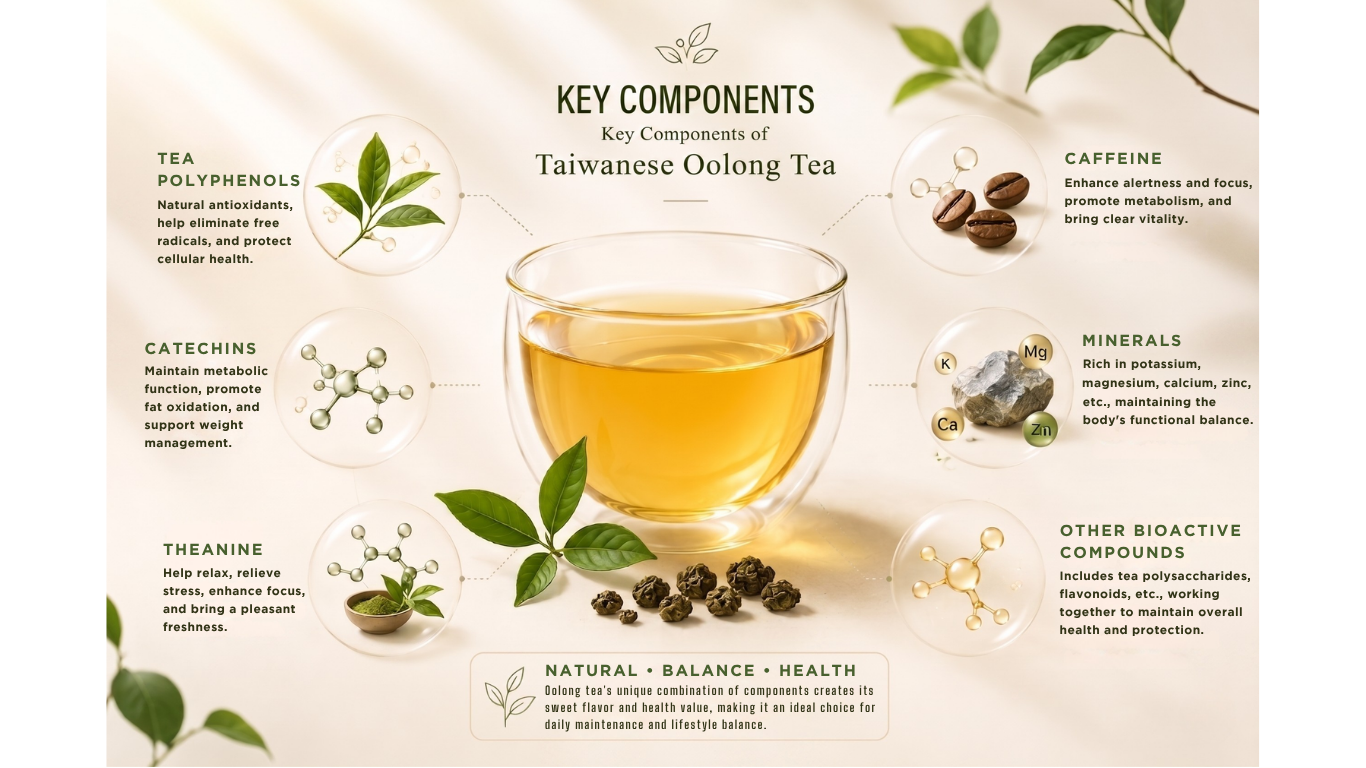
The secret to Oolong’s efficacy lies in its chemical composition. Unlike unfermented green tea or fully fermented black tea, Oolong undergoes a partial oxidation process where catechins polymerize to form unique Oolong Tea Polymerized Polyphenols (OTPPs).
- OTPPs: This is the core component behind Oolong’s "oil-cutting" (fat-blocking) effect, as it effectively interferes with fat absorption.
- The Golden Ratio: Oolong tea also retains monomeric catechins (such as EGCG), caffeine, L-theanine, and minerals. This specific ratio provides a "dual-engine" boost for metabolism.
II. The Science of Fat Burning: Boosting Metabolism
The reputation of Oolong tea as a "fat-scraper" is not just a psychological effect; it is backed by scientific research.
1. Activating Fat Oxidation: Studies show that drinking Oolong tea signifinatly increases the body’s Basal Metabolic Rate (BMR).
- The Principle: Caffeine and catechins work synergistically to activate the sympathetic nervous system, promoting the oxidation and decomposition of fatty acids, effectively turning stored fat into energy.
2. Inhibiting Fat Absorption (Deep “Oil-Cutting”): This is Oolong’s most distinct advantage, making it a favorite among office professionals.
- The Key Intervention: OTPPs inhibit the activity of Pancreatic Lipase, the enzyme responsible for breaking down fats.
- Scientific Result: When lipase activity is suppressed, the intestines absorb less fat from food, and unabsorbed fat is excreted from the body. This helps control weight and improves post-meal blood lipid levels.
3. Blood Sugar Regulation & Appetite Control
Polysaccharides in Oolong tea help improve insulin sensitivity and balance blood sugar fluctuations. This reduces the hunger pangs caused by sudden blood sugar drops, helping you manage your appetite behaviorally.
Quick Science Guide: Oolong’s Metabolic Impact
| Focus | Key Component | Scientific Principle | Health Benefit |
| Deep Fat-Blocking | OTPPs | Inhibits lipase activity; interferes with intestinal fat absorption | Reduces calorie intake; improves post-meal blood lipids |
| Metabolic Boost | Caffeine + Catechins | Synergistic effect activates the nervous system to induce fat oxidation | Increases BMR; converts fat into energy |
| Blood Sugar Balance | Tea Polysaccharides | Improves insulin sensitivity; stabilizes blood sugar | Reduces hunger; assists in appetite control |
| Cellular Shield | Natural Polyphenols | Neutralizes free radicals; protects cellular DNA | Anti-aging; protects cardiovascular health |
III. The Cellular Shield: Superior Antioxidant Power
Respiration and metabolism produce Free Radicals, which are the main drivers of aging and disease.
- Neutralizing Free Radicals: Oolong polyphenols are powerful antioxidants that neutralize superoxide anions, protecting cell membranes and DNA from damage.
- Cardiovascular Guardian: They effectively prevent the oxidation of low-density lipoprotein (ox-LDL), helping to prevent atherosclerosis and maintain vascular elasticity.
- Skin Protector: Tea polyphenols protect against UV-induced damage and inhibit collagenase activity, helping skin remain firm and radiant.
IV. Xun Xiang Tea Shop: Integrating Science into Daily Life
At Xun Xiang Tea Shop, we care about the vitality behind every leaf. For those prioritizing long-term physical wellness, Oolong tea is the perfect lifestyle companion.
🍃 Xun Xiang Cold Brew: The office "Lightness" Ritual, "Cold Brew Oolong" is an excellent choice for a low-sugar lifestyle.
- Natural Sweetness: Taiwan Oolong tea has a natural floral aroma and sweetness, providing a pleasant taste without added sugar.
- Zero Burden: Compared to sugary drinks, cold brew Oolong is extremely low in calories and perfect for a chilled bottle on the go.
🍵 Xun Xiang Hot Brew: The Post-Meal "Oil-Cutter"
- Best Timing: We recommend drinking it 30 to 60 minutes after a meal to maximize the fat-blocking effect while being gentle on the stomach.
- Scientific Brewing: Use 90°C–100°C water to release the beneficial polyphenols, but wait until the tea cools below 60°C to drink safely.
Conclusion: Tea as a Lifestyle Choice
Oolong tea is more than a beverage; it is a "metabolic regulator" gifted by nature. It offers a perfect balance between relaxation and alertness. Whether it is a quick hot brew in the office or a cold brew after a workout, the goal is to slow down and give your body a comfortable start in a fast-paced world.
May every tea lover find their own path to health and enjoyment in a cup of Oolong from Xun Xiang.